

What can a business claim on tax?
What can a business claim on tax? In Australia, a business can generally claim tax deductions for expenses that are directly related to earning business income. That can include many day-to-day costs such as wages, rent, software, marketing, insurance, and other operating expenses, depending on the circumstances. The key points are simple: the expense must have a business purpose, any private use needs to be excluded, and your business must have records to support the claim. The ATO small business deductions information, the broader ATO business deductions guidance, and the business.gov.au tax deductions guide all support that framework.
This is where many business owners get caught out. Some expenses may be fully claimable, some may only be partly claimable, and some may not be deductible at all. If a phone, car, or internet service is used for both business and personal reasons, only the business-use portion can usually be claimed. Good records matter too, with business.gov.au saying businesses generally need written evidence and should usually keep records for at least five years.
In this guide, we’ll explain what a business can usually claim on tax, what often gets missed, what should be treated carefully, and when it makes sense to get help. If you want tailored support beyond general guidance, our Accounting and tax and Business tax return services pages are a good next step.
Quick summary
- Businesses can generally claim expenses that are directly related to earning assessable income.
- If an expense is partly private and partly business, only the business portion is usually claimable.
- Common claim areas include operating expenses, wages, super, travel, home-based business costs, and depreciating assets.
- Poor record keeping is one of the easiest ways to create problems at tax time.
- Some expenses, such as entertainment or mixed-use costs, need extra care before they are claimed.
- Good Tax planning can help your business avoid missed deductions and reduce the risk of overclaiming.
The short answer: what can a business claim on tax?
A business can generally claim tax deductions for expenses incurred in carrying on the business and earning assessable income. In simple terms, if a cost is genuinely tied to running your business, it may be deductible. The ATO and business.gov.au both point to common areas such as vehicle expenses, wages and super, home-based business costs, repairs and maintenance, operating costs, and depreciating assets.
That does not mean every business cost is claimable in full. Some expenses are fully business-related and may be claimed in full. Others are partly private and need to be apportioned. A phone plan, internet bill, vehicle, or home office setup may all have both work and personal use, so only the business-use share is generally claimable. This is where many businesses make mistakes. If you need help working out how expenses should be treated in your return, our Business tax return services page is the most relevant next step.
The 3 rules that decide whether an expense is claimable
Before looking at specific expenses, it helps to understand the three basic rules behind most business tax deductions. The ATO business deductions guidance and the business.gov.au tax deductions guide both point back to the same core idea: the expense must be connected to earning business income, it cannot be private in nature, and you need records to support the claim.
It must relate to earning business income
The expense needs a clear business purpose. That could include rent, bookkeeping software, business insurance, wages, marketing, or equipment used in your operations. If the connection to earning income is clear, the claim is more likely to stand up.
It cannot be private or personal in nature
If there is a private component, only the business-use portion can usually be claimed. This comes up often with cars, phones, internet, travel, and home-based expenses. For example, if you use your mobile for both client calls and personal use, you generally cannot claim the full bill.
You need records to support the claim
Even a legitimate expense can become a problem if you do not have the right evidence. Depending on the expense, that may include receipts, invoices, bank statements, logbooks, payroll records, or documents showing how you worked out the business-use percentage. If record keeping is messy, tax time becomes harder and the risk of errors increases. This is also where structured Accounting and tax support can help, especially if your business has mixed-use expenses or more complex claim areas.
A simple way to think about claims: fully claimable, partly claimable, and usually not claimable
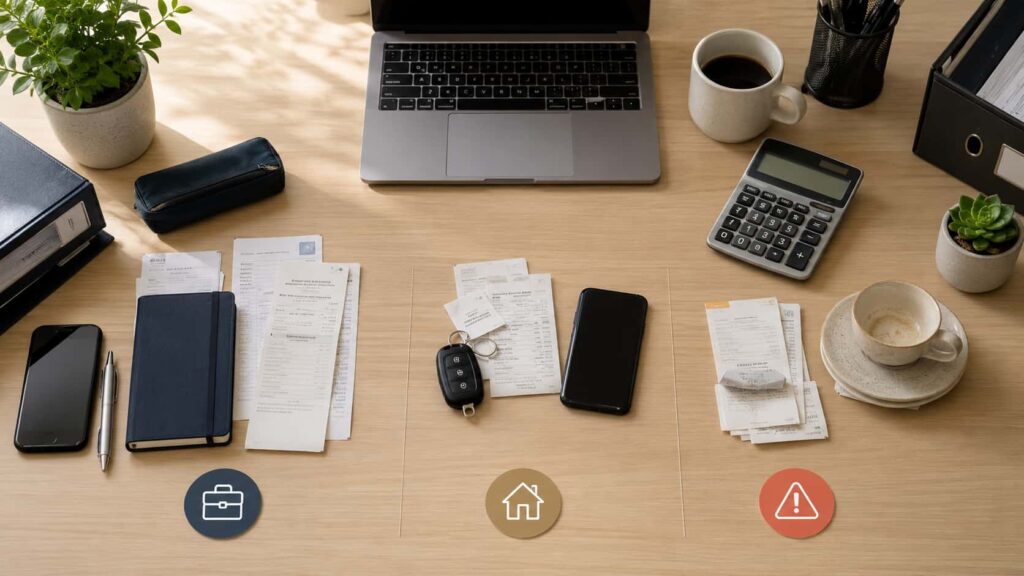
A practical way to understand deductions is to sort expenses into three groups: fully claimable, partly claimable, and usually not claimable. This makes the topic much easier to apply in real life.
Fully claimable expenses
These are expenses used only for the business. Examples may include bookkeeping software, merchant fees, accounting fees, business insurance, website hosting, office stationery for business use, and staff wages. Where the expense is genuinely 100% business-related and documented properly, it will usually sit in this category.
Partly claimable expenses
These are costs with both business and private use. Common examples include phone bills, internet plans, cars, mixed-purpose travel, and home-based business costs. In these cases, only the business-use portion is generally claimable.
Usually not claimable expenses
These are costs that are private, unsupported, or commonly misunderstood. Personal living expenses, the private share of mixed-use costs, and unsupported claims all fall into this group. Entertainment can also be tricky, which is one reason good Tax planning matters before lodgement time.
Common business expenses you may be able to claim
Many business deductions fall into a handful of common categories. The challenge is not usually recognising the expense. It is understanding whether it is fully business-related, partly private, capital in nature, or subject to special treatment.
Everyday operating expenses
This may include rent, utilities, phone and internet costs, software subscriptions, website hosting, merchant fees, office supplies, insurance, bank fees, and professional service costs. Where these are genuinely business-only, they are usually easier to claim. Where they are mixed-use, they need to be split properly. Good systems for Accounts payable receivable make this easier by keeping invoices and supplier payments clear and organised.
Staff costs
Wages and super contributions are another major claim area. If you employ staff, these costs are a normal part of running the business. This area can become more complex where directors, owners, contractors, or family members are involved, so good records matter. Our Payroll support page is relevant here if your business needs help staying on top of wages, super, and reporting obligations.
Motor vehicle and travel expenses
Fuel, registration, servicing, insurance, tolls, parking, and business travel costs may all be relevant, but the claim depends on how the expense was used. If a car or trip has both business and personal use, only the business portion is generally claimable. If your business provides employee vehicle benefits or similar perks, it may also be worth reviewing Fringe benefits tax.
Tools, equipment and business assets
Businesses often spend money on assets such as computers, tools, machinery, office furniture, or specialised equipment. These costs can be relevant at tax time, but they do not always work like ordinary running expenses. In some cases, the cost may need to be treated over time rather than claimed in full straight away. If you are unsure, broader Accounting and tax support can help make sure assets are handled properly.
Marketing and professional services
This can include advertising, branding, website work, design, bookkeeping, accounting, legal support, and subscriptions connected to running the business. These costs are often essential to attracting clients, keeping operations organised, and meeting compliance obligations. Accounting and tax and Business tax return services are the natural next steps if you want tailored support.
What home-based businesses can often claim
Running a business from home does not mean every household cost becomes deductible, but some expenses may be claimable where there is a genuine business connection. This is one of the most misunderstood areas of business tax because the treatment can depend on how the business is run, what part of the home is used, and whether the cost is a running expense or an occupancy expense. business.gov.au specifically lists home-based business expenses as an area to review, but the details still depend on the circumstances.
Running expenses
Running expenses are the day-to-day costs of using your home for business activities. Depending on the setup, this may include electricity, gas, internet, phone use, stationery, cleaning, and small office consumables. If those services are also used privately, only the business-use portion may be claimable.
Occupancy expenses
Occupancy expenses are different from running expenses and generally need more care. These are costs linked to occupying the home itself rather than simply running a workspace within it. Not every home-based business will be able to claim these costs, so this is an area where assumptions can cause problems. Our Tax planning page is relevant here if your business wants to review home-based claims before lodgement.
Fixed rate vs actual cost method
In some situations, a fixed rate method may be available. In others, actual costs may be more appropriate. The right method depends on the type of claim, the records available, and the facts of the business. The key point is that home-based business claims should be worked out carefully and supported with records.
What many businesses miss at tax time
When people think about deductions, they often focus on the obvious expenses such as rent, wages, fuel, or software. But some claim areas get overlooked because they are less visible in day-to-day operations. Competitor content shows this clearly, with both Reckon and CommBank highlighting missed deductions and year-end claim opportunities separately.
Common examples include:
- Prepaid expenses, such as software subscriptions, insurance, rent, or service agreements paid in advance.
- Bank fees and loan interest, which are often forgotten because they sit inside broader banking activity.
- Bad debts, where income was earned but later could not be recovered.
- Self-education and training, including courses, subscriptions, and professional development tied to the business.
- Tax management and bookkeeping costs, which businesses often forget to include. Our What is business tax planning? A practical guide for Australian businesses article is relevant here because many missed deductions come down to poor review rather than lack of eligibility.
The broader lesson is simple. Businesses often miss deductions because the records were not reviewed strategically, the expenses were not categorised well, or the right questions were not asked early enough.
What a business usually cannot claim, or cannot claim in full
Knowing what a business can claim is only half the picture. It is just as important to know what should be excluded, adjusted, or treated with caution. This is where many mistakes happen, especially when a cost feels business-related on the surface but includes a private element, lacks supporting records, or falls into a misunderstood category.
Private expenses
Private or personal expenses are generally not deductible, even if they are paid from the business account. Buying something through the business does not automatically make it a business deduction. The expense still needs a real connection to earning business income.
Mixed-use expenses without apportionment
Cars, internet, mobile phones, and home-based costs are common examples of mixed-use expenses. Where an expense has both business and private use, the business generally needs to work out the business-use percentage and claim only that portion.
Entertainment in many cases
Entertainment is one of the most misunderstood categories. Meals, functions, client hospitality, and social spending are often assumed to be deductible because they happen in a business setting, but that is not always the case. The treatment depends on the circumstances, so this is an area where businesses should be careful. If your business provides meals, perks, or other benefits to employees, it may also be worth reviewing Fringe benefits tax.
Home costs that are not genuinely business-related
Home-based businesses can claim some expenses, but not every cost linked to the home is deductible. The business purpose, the way the space is used, and the type of cost all matter.
Expenses without proper evidence
Even if an expense would otherwise be deductible, it can still become a problem if there is no evidence to support the claim. Missing receipts, invoices, statements, or working papers make a claim much harder to justify.
Does your business structure change what you can claim?
In some cases, yes. The basic rules around business deductions still apply across different entity types, but the treatment of some expenses can vary depending on whether the business is a sole trader, company, partnership, or trust. In practice, this matters most where owner payments, wages, benefits, reimbursements, or distributions are involved.
- Sole traders often need to pay closer attention to mixed-use expenses such as phones, vehicles, internet, and home office costs.
- Companies may need extra care where expenses relate to directors, employees, reimbursements, or benefits.
- Partnerships should clearly separate true business expenses from costs that belong to one partner personally.
- Trusts can add complexity to how income and expenses are handled, which is why tailored advice is often more important.
If your structure affects how claims should be treated, our Business tax return services page is a good next step.
Records you should keep to support your claims
Good record keeping is one of the most important parts of claiming business deductions properly. Government guidance says records should explain the transactions, be in writing, be in English or easily converted into English, and generally be kept for at least five years, although some records may need to be kept longer.
Receipts and tax invoices
These are the first line of evidence for most expenses. They help show what was purchased, when it was purchased, who supplied it, and how much was paid. Bank statements alone do not always explain the business purpose clearly enough.
Bank and credit card records
These help confirm timing, amount, and payment method, especially for recurring expenses such as software subscriptions, merchant fees, insurance, and utility bills. Strong systems around Accounts payable receivable make this much easier.
Vehicle logs and travel records
Vehicle and travel expenses often need extra evidence because they are commonly mixed between business and personal use. Logbooks, travel records, and supporting documents can all be important here.
Home office records
Home-based business claims also need proper support, especially where costs are apportioned between personal and business use. That may include records showing how often the workspace is used and how the business portion was calculated.
Payroll and super records
If your business has staff, wage and super records are essential. Our Payroll support page is relevant for businesses that want to stay organised and reduce tax-time issues.
How long to keep them
As a general rule, businesses should keep records for at least five years. Our Prepare your business for tax return lodgement page is a helpful next step if you want to tighten up the way your business prepares for year-end.
 Examples of common tax claim questions from business owners
 Examples of common tax claim questions from business owners
Once business owners understand the basic rules, the next questions are usually very practical.
Can I claim my phone and internet?
Often yes, but usually not the full amount unless the service is used only for business. The business-use portion generally needs to be worked out and supported.
Can I claim my car?
Potentially, yes, but vehicle claims are one of the areas where businesses need to be careful. If it is used for both business and private purposes, only the business portion is usually claimable.
Can I claim work from home costs?
Sometimes, yes. Running expenses linked to using part of the home for business may be claimable, but that does not mean all household costs automatically become deductions.
Can I claim software and subscriptions?
In many cases, yes, where the software or subscription is used to operate the business, deliver services, manage finances, or support administration.
Can I claim meals or entertainment?
Sometimes, but this is one of the most misunderstood categories. It is better to treat this area cautiously rather than assume it can be claimed.
Can I claim equipment I bought before 30 June?
Potentially, yes, but the answer depends on the type of equipment, how it is used, and how the cost should be treated for tax purposes. If readers want help with the actual return process, this is a good place to point them to How to lodge a business tax return.
How to avoid overclaiming or missing deductions
Most tax-time mistakes happen at the edges. Businesses either claim too much because they assume a cost is fully deductible, or they miss deductions because the expense was not reviewed properly.
Separate personal and business spending
When personal and business spending are mixed together, it becomes much harder to work out what is genuinely claimable. Separate accounts, cleaner coding, and consistent bookkeeping reduce that risk.
Review expenses regularly, not just at EOFY
Leaving everything until the end of the financial year is one of the main reasons deductions get missed. Regular reviews also help spot mixed-use costs, missing documents, and categories that need a second look. This is a natural place to link to Tax planning.
Use clear categories in your bookkeeping
Clean categories make it easier to identify operating costs, staff costs, travel, subscriptions, finance costs, and assets that may need different treatment. Good categorisation also supports stronger cash flow management, which is why it makes sense to point readers toward How can a business improve cash flow.
Get advice on grey areas before lodging
Entertainment, home-based expenses, mixed-use assets, director-related costs, and structural issues can all create uncertainty. Getting advice before lodging helps businesses make better decisions and avoid unnecessary risk.
When to get help from a tax professional
A guide like this can help you understand the general rules, but it cannot replace advice that is specific to your business. The right tax treatment can depend on your business structure, the type of expense, whether there is any private use, how the asset should be treated, and how strong your records are. Even business.gov.au notes that if you are unsure what deductions your business can claim, you should speak with your accountant, business adviser, or the ATO.
This becomes more important when the business has grown beyond the basics. If you have staff, use vehicles across both business and personal activities, work from home, buy equipment, provide employee benefits, or operate through a company, trust, or partnership, the margin for error gets smaller. If you want help with that process, our Business tax return services page is the best next step. For businesses that want broader financial oversight, not just tax compliance, our CFO services page may also be relevant.
Get clarity on what your business can claim
Understanding what a business can claim on tax is not just about finding more deductions. It is about making sure expenses are treated correctly, records are in order, and your business is not exposed to unnecessary risk. When claims are reviewed properly, you get clearer numbers, better decisions, and more confidence at tax time.
Disclaimer: This article is general information only and does not take into account your business structure, financial position, or specific circumstances. Tax deductions can vary depending on how an expense is used, how your business is set up, and the records you keep. Before acting on this information, consider getting advice tailored to your situation.
If you are unsure what your business can claim, or you want a clearer review of your current deductions, we’re here to help. Our team provides practical support through Business tax return services, broader Accounting and tax guidance, and forward-looking Tax planning support, so you can focus on running your business with confidence.
Get in touch to take the guesswork out of business tax claims.