
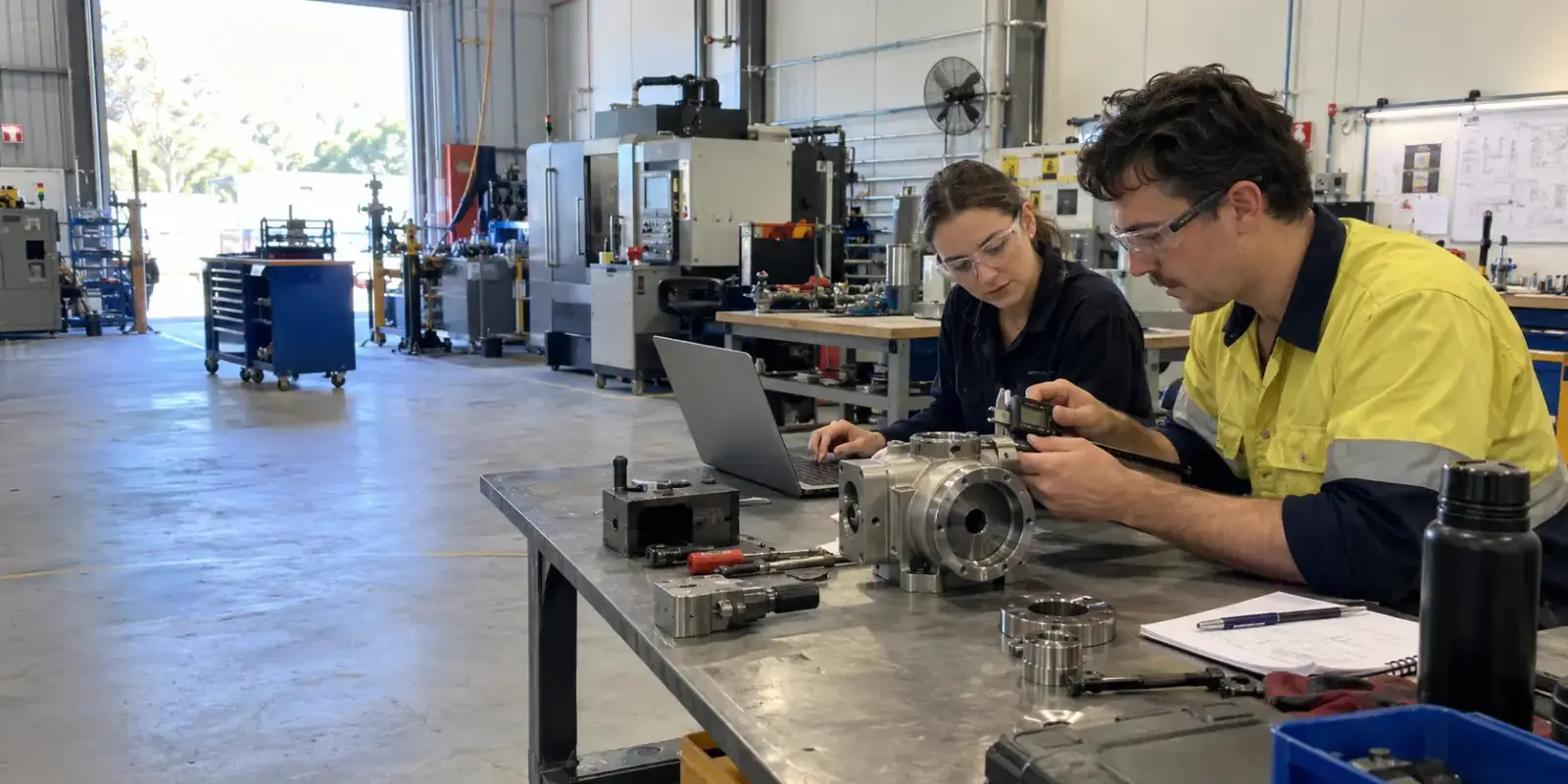
R&D Tax Incentive Eligibility: Who Qualifies?
R&D tax incentive eligibility in Australia depends on your company structure, the experimental work you carry out and the expenditure you can support with records. A company developing something new may qualify, but innovation or product development alone does not establish eligibility.
The Australian Research and Development (R&D) Tax Incentive provides a tax offset for certain eligible activities. This guide explains the rules applying in October 2026, including the activity tests, minimum expenditure, registration dates and common exclusions. Origin Business Consultants works with Australian businesses to review their R&D activities and prepare supporting documentation.
Quick Summary
- Company eligibility: Australian incorporated companies and certain foreign corporations may qualify. Sole traders generally cannot claim in their own right.
- Activity eligibility: You need at least one core R&D activity that tests a hypothesis through experiments to generate new knowledge.
- Expenditure: The usual minimum is $20,000 of eligible R&D expenditure for the income year, with limited exceptions.
- Timing and evidence: Register activities within 10 months after your company’s income year ends, and keep records as the work takes place.
Which Businesses Can Claim the R&d Tax Incentive?
Eligible R&D entities are generally companies incorporated under Australian law. Certain foreign-incorporated corporations may also qualify where they meet Australian tax residency requirements or operate through a qualifying Australian permanent establishment. The Australian Taxation Office (ATO) determines entity eligibility.
- Australian proprietary and public companies: May qualify if the remaining activity, expenditure and registration conditions are satisfied.
- Foreign-Incorporated companies: May qualify under the specific residency or permanent-establishment rules.
- Sole traders, ordinary partnerships and trusts: Do not generally qualify as R&D entities in their own right. Special rules can apply to eligible corporate partners in an R&D partnership and some trust arrangements.
- Consolidated corporate groups: The group’s head company may need to register and claim under the consolidation rules.
Company structure is only the starting point. Generally, the activities must be conducted for your company’s benefit. The ATO considers who controls the work, who bears the financial risk and who effectively owns or benefits from the results. This matters when a contractor develops technology for a customer, or multiple entities fund the same research.
What Research and Development Activities Are Eligible?
To qualify, your company must carry out at least one core R&D activity. Other work may qualify as supporting R&D if it meets the relevant connection and purpose requirements. You assess individual activities rather than treating a whole product launch or project as eligible.
Core R&D Activities Must Involve Experimental Work
A core activity aims to generate new knowledge and has an outcome that a competent professional could not know or determine in advance using existing knowledge, information and experience. Your team must resolve that uncertainty through a systematic progression of work based on established scientific principles.
- Set a hypothesis. Make a reasoned prediction about the unknown technical outcome.
- Design and carry out experiments. Use a method that can test the hypothesis.
- Record observations. Capture data and results from each experiment, including unsuccessful tests.
- Evaluate the evidence. Compare the results with your hypothesis and review what they mean.
- Reach logical conclusions. Document the new knowledge gained and any follow-up experiments.
An experiment can qualify even when it fails to produce the result your company hoped for. You still need to demonstrate that the activity met the eligibility requirements when you undertook it.
Core R&D Versus Supporting R&D
| Assessment | Core R&D activity | Supporting R&D activity |
|---|---|---|
| Main requirement | An experimental activity with an unknown outcome, designed to generate new knowledge. | An activity directly related to an identifiable eligible core R&D activity. |
| How it is assessed | Requires a hypothesis, experiment, observation, evaluation and logical conclusions. | Some activities must also be carried out for the dominant purpose of supporting core R&D. |
| Illustrative example | Testing whether a novel filtration method works under conditions that existing scientific knowledge cannot predict. | Preparing specific experimental samples or operating a test rig as part of that qualifying filtration experiment. |
Illustrative examples only. A real activity must be assessed against the full legislative tests.
The Department of Industry’s guidance on core R&D activities explains these requirements and the evidence companies should maintain.
Which Activities Are Not Eligible for the R&D Tax Incentive?
Routine commercial work and certain activities excluded by law cannot qualify as core R&D. The fact that an activity is expensive, innovative for your business or technically difficult does not change the statutory tests. Common areas to examine include:
- Routine testing and quality control: Checking a finished product against existing standards or conducting tests required to demonstrate statutory compliance.
- Market research and sales promotion: Customer surveys, marketing trials and research into commercial demand.
- Ordinary software development: Configuration, debugging or applying established methods where the technical outcome is already known. Software developed mainly for your own or a connected entity’s internal business administration is specifically excluded as core R&D.
- Mineral or petroleum exploration: Prospecting or drilling undertaken to discover deposits or establish their location, size or quality.
- Management studies and routine improvements: Business efficiency surveys, normal optimisation and operational changes based on established techniques.
- Other statutory exclusions: Certain patent administration, reverse engineering and research in social sciences, arts or humanities.
An activity excluded from being Core R&D may still qualify as supporting R&D where it is directly related to eligible core work and its dominant purpose is to support that work. Different restrictions apply to gambling- and tobacco-related activities: for income years starting on or after 1 July 2025, these can only qualify where conducted for the sole purpose of harm minimisation.
Review the government’s list of excluded R&D activities when assessing borderline work.
Can Software, Mining and Manufacturing Businesses Qualify?
Yes. The R&D Tax Incentive can apply across industries, but eligibility depends on the particular activity and evidence. These hypothetical examples show where the distinction matters.
Software and Technology
A software company develops a new data-processing method and tests competing hypotheses to resolve a performance problem that established approaches cannot answer. Those experiments may qualify as core R&D if all requirements are met. Building a standard website, integrating a known application programming interface or configuring an internal payroll system would not qualify merely because the work requires developers.
Mining and Resources
A WA processing operation experimentally tests a new mineral recovery technique because existing technical knowledge cannot predict performance across a particular ore mix. Its controlled experiments may qualify. Drilling to locate a deposit or testing routine production samples for compliance does not qualify as core R&D for those purposes.
Manufacturing, Agriculture and Clean Technology
A manufacturer tests a novel material formulation against a scientific hypothesis under controlled conditions. The experimental work may qualify, while ordinary production runs and quality checks generally do not. Similar principles apply to agricultural technology, energy systems and biotechnology, where technical questions cannot be resolved through existing methods.
What Is the Minimum R&D Spending Requirement?
You usually need at least $20,000 in eligible R&D expenditure or other eligible notional deductions for the company income year. Limited exceptions apply, including certain expenditure on activities conducted by a registered Research Service Provider (RSP) and contributions under the Cooperative Research Centres Program. The exception does not make otherwise ineligible activities claimable.
Costs may include the eligible share of employee wages, contractors, experimental materials, overheads and decline in value of assets used in R&D. Your company must connect each cost to registered eligible activities and use reasonable, documented methods to apportion shared costs. Capital expenditure, ordinary business expenses and excluded costs require separate review.
For example, if an engineer spends two days each week conducting eligible experiments and three days on commercial delivery, your company needs reliable activity and time records before allocating any salary costs to R&D. An estimated percentage without supporting evidence may not be sufficient.
Payments to associates, such as related entities or certain connected people, need particular care. Under the R&D rules, eligible expenditure incurred to an associate generally cannot be included in an R&D offset claim until paid. Specific rules can allow claims in a later income year when payment occurs. Read Origin’s guide to R&D associate payments for more context.
$20,000Eligible expenditure or notional deductions per income year, subject to limited exceptions.
Under $20mAggregated annual turnover, subject to tax-exempt ownership restrictions.
10 monthsAfter the relevant company income year ends, unless an extension is granted.
What Tax Offset Rates Apply in 2025–26 and 2026–27?
For company income years beginning before 1 July 2028, the rate depends on your aggregated turnover and, for larger companies, R&D intensity. Aggregated turnover generally takes relevant connected businesses and affiliates into account, so it is not always the same as the sales figure in a single company’s accounts.
R&D Tax Offset Rates Under Current Rules
| Entity or expenditure | Offset under the current rules | Important condition |
|---|---|---|
| Under $20 million aggregated turnover | Refundable offset: company tax rate + 18.5 percentage points. | Must not be controlled by one or more income tax-exempt entities. |
| $20 Million or more, or controlled by income tax-exempt entities | Non-Refundable offset: company tax rate + 8.5 percentage points on eligible expenditure up to 2% R&D intensity; + 16.5 points on eligible expenditure above that level. | The higher rate applies to the portion above the 2% threshold, not retrospectively to all expenditure. |
| Eligible R&D expenditure above $150 million | Offset generally equals the applicable company tax rate for the excess. | No additional R&D premium on expenditure beyond the current cap. |
Rates reflect current arrangements for income years starting before 1 July 2028. The final amount depends on company tax status, calculated eligible expenditure, ownership and applicable adjustments.
A refundable offset can potentially benefit an eligible company that has little or no taxable profit, but it does not mean the full stated percentage becomes a cash refund. The offset is calculated and applied through the company tax return, and other tax liabilities or adjustments may affect the amount received. A non-refundable offset generally reduces eligible tax liabilities and may be carried forward subject to the tax rules.
Can You Claim R&D Work Performed Overseas?
Only in limited circumstances. For overseas R&D expenditure, you need a positive overseas finding from the Department of Industry before claiming the tax offset. The overseas work must satisfy specific tests, including a necessary connection to core R&D conducted solely in Australia and a reason the overseas work cannot be carried out solely in Australia. Cost savings alone are not enough.
The overseas expenditure must also be less than the expenditure on related R&D activities conducted solely in Australia. Your company must apply for the overseas finding before the end of the income year in which the overseas activity occurs. The normal 10-month registration deadline does not replace this earlier requirement.
See the official overseas finding conditions before engaging overseas laboratories, researchers or contractors.
What Records Must You Keep to Establish Eligibility?
You must be able to show both why your activities meet the R&D tests and how you calculated the associated expenditure. Keep records as the experiments happen, rather than reconstructing the technical work and costs months later. Government guidance says to retain R&D records for five years after claiming the expenditure.
- Before the experiment: Existing knowledge reviews, the technical uncertainty, the hypothesis, proposed test methods and research approvals.
- During the experiment: Dated trial plans, lab notes, code changes, test results, observations, unexpected outcomes and decisions.
- After each test: Evaluation notes, conclusions, revised hypotheses and evidence of new knowledge generated.
- Financial support: Employee activity records, timesheets where appropriate, supplier invoices, payment records, contracts and a clear allocation of shared costs.
- Ownership and governance: Agreements showing who controls the activities, benefits from the results and bears the financial risk.
For more detail, see Origin’s article on substantiating R&D tax incentive records. The Australian Government’s record-keeping guidance provides activity and expenditure examples.
When Must You Register Your R&D Activities?
Companies generally must register eligible R&D activities with the Department of Industry within 10 months after the end of their income year. For companies with a 30 June year end, the standard deadlines are:
Registration Dates for Standard 30 June Year-End Companies
| Income year | Standard registration deadline | Other action |
|---|---|---|
| 1 July 2025 to 30 June 2026 | 30 April 2027 | Register the 2025–26 activities before claiming in the relevant company tax return. |
| 1 July 2026 to 30 June 2027 | 30 April 2028 | Keep evidence as activities occur and register that year’s activities separately. |
These dates assume a 30 June income year end. Companies with substituted accounting periods have different deadlines. Late registration may be possible only where the department grants an extension.
After registration, your company uses the registration details to complete the R&D Tax Incentive schedule and claim an eligible offset through its company income tax return with the ATO. Registration is an administrative step and Does not confirm eligibility.
From Eligibility Review to Tax Return
- Assess and document
Identify each potentially eligible activity, its scientific uncertainty, purpose and supporting evidence.
- Register the activities
Submit the annual application through the R&D Tax Incentive customer portal within the relevant deadline.
- Prepare the tax claim
Reconcile eligible expenditure, check any adjustments and complete the company tax return and R&D schedule.
How Can You Assess Your R&D Eligibility Before Claiming?
Start with the technical work and the company that carried it out. The following checklist is a practical first review, not a determination by the ATO or the Department of Industry.
R&D Tax Incentive Eligibility Checklist
Use these questions for an initial review. A tick does not confirm eligibility or approval.
- Is your business an eligible R&D entity under the company and tax residency rules?
- Can you identify at least one experimental core R&D activity, rather than only a project title?
- Can you explain why a competent professional could not know the outcome in advance?
- Do your records show a hypothesis, experiments, observations, evaluation and conclusions?
- Are supporting activities linked to identified core activities, with the dominant-purpose test considered where relevant?
- Have you separated routine commercial work and statutory exclusions from eligible activities?
- Can you link expenditure and, where relevant, control and ownership of results to the claiming company?
- Have you checked the $20,000 threshold, any overseas finding requirements and the registration deadline?
If the scientific or technical eligibility is uncertain, your company may request an Advance finding from the Department of Industry. A positive finding for the described activities can provide greater certainty about those activities, but it does not replace the ATO’s separate expenditure assessment or annual registration requirements.
How Origin May Be Able to Help
Origin Business Consultants is a First Nations-led accounting, tax and business advisory firm based in West Perth. We help Australian businesses understand the R&D Tax Incentive requirements and prepare better-supported decisions and claims.
For example, a resources business conducting processing trials may need help distinguishing experimental activities from normal site operations. A software company may need help identifying technical experiments and separating them from commercial development. In either case, Origin may be able to assist with reviewing activities, assessing eligible expenditure, organising records and preparing registration and tax documentation.
Where the question involves specialist scientific evidence, intellectual property ownership or contractual rights, technical or legal advice may also be required. Eligibility decisions remain with the relevant authorities, and the financial outcome depends on the company’s circumstances and current law.
Get in touch with our R&D tax experts in Perth to better understand your eligibility.
FAQs
General information: This article is general in nature and does not take into account your objectives, financial situation or individual circumstances. Tax, accounting and business outcomes depend on your circumstances and the rules applying at the relevant time. Consider obtaining professional advice before acting.
Government Sources
Reviewed 23 October 2026. Primary references for the rules described above: